
// Hamstring Tendon Tears in Yoga: Anatomy, Prevention, and Teaching Tips //
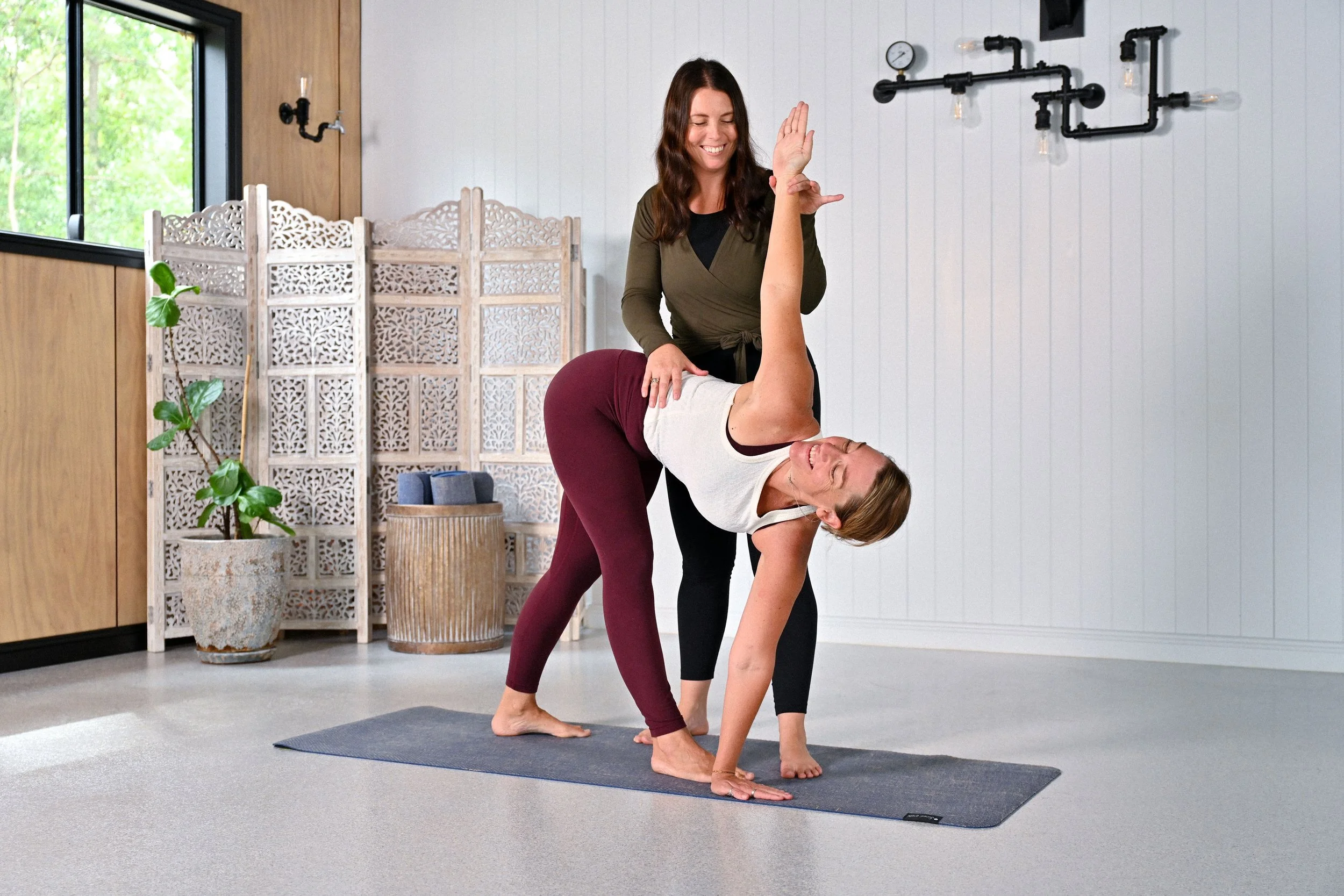
Hamstring injuries are one of the most common issues seen in yoga practice. Unfortunately, it is common for yoga students to experience microscopic tears at the top of the hamstrings where the tendon attaches to the ischial tuberosity (the sit bones).
By combining yoga anatomy knowledge with mindful cueing, teachers can help their students prevent common hamstring injuries and cultivate a more balanced, sustainable practice.
Understanding the anatomy of the hamstrings, and teaching from this awareness not only prevents injuries but also empowers your students to move with confidence, strength, and longevity in their yoga journey.

// Muscle Spindles vs Golgi Tendon Organs: How Understanding These Receptors Can Transform Your Yoga Teaching //
Understanding the difference between the muscle spindle and the GTO helps you work with the body’s nervous system, not against it. This knowledge can help you:
Create more effective flexibility gains over time
Prevent over stretching injuries
Empower students to understand their bodies more deeply
Offer intelligent, anatomy-informed cues that elevate your teaching

// Concept of Tensegrity : Why it’s important as a yoga teacher to understand it //
Tensegrity is a beautiful reminder that the body thrives when it works as a whole. Every part matters, and when we move with that awareness, practice becomes not just safer, but far more beneficial.

// Understanding Shoulder Flexion: A Biomechanics Guide for Yoga Teachers //
As yoga teachers, one of the most powerful tools we can develop is a deeper understanding of biomechanics. When we know how the body is designed to move, we’re better equipped to guide our students safely, offer more targeted cues, and provide modifications that will support their practice.

// Why is it SO important to understand the anatomy of the hand as a yoga teacher? //
If you look to the picture of the hand, you will see how small the bones of the hand really are. If you aren’t instructing cues such as “spread through the fingers”, “spread through the palm of the hand”, “stiffen through the fingers”.. we could be compressing some of these little bones.

// My top two tips for a healthy spine with yoga //
This month I wanted to share my top two tips for keeping your spine healthy and strong through yoga. Whether you’re a teacher or a student, these insights can make a big difference in how your body feels, both on and off the mat.

Understanding Fascia: A Practical Guide for Yoga Teachers {Part II}
Understanding fascia helps yoga teachers approach the body in a more holistic, integrated way. When we honour fascia’s role in our students’ movement, emotions, and postural patterns, we can teach in a way that supports true, long-lasting change—on and off the mat.

Understanding Fascia: A Practical Guide for Yoga Teachers {Part 1}
Fascia is a connective tissue—a continuous, three-dimensional web of collagen-rich fibres that wraps around every muscle, bone, nerve, blood vessel, and organ in the body. Think of it as a full-body, internal cling wrap system. It binds structures together while allowing them to move independently.

Understanding Knee Hyperextension in Yoga: Is It Really a Problem?
As yoga teachers, we’re often taught to cue students to avoid hyperextending their knees. But is knee hyperextension inherently harmful—or are we overlooking an important aspect of knee biomechanics?

Neck Pain and Yoga - Why it occurs, and how can you prevent it?
My biggest passion is helping yoga teachers understand how injuries in yoga can happen. Not to instill fear in you but to educate you to be able to understand how they can happen so you can best prevent injuries from occurring in your yoga classes.

Understanding the Vagus Nerve and How Yoga Can Influence It
As yoga teachers, we guide our students to reduce stress and impact the nervous system, for the better. But how can we deepen our understanding of the body’s physiological processes to enhance our teachings? One powerful player in this process is the vagus nerve—a key component of the parasympathetic nervous system

The Benefits of Proper Breathing Mechanics on our Nervous System
We all know that when we breathe in yoga we feel better physically but also mentally, do you know why? What is happening to your nervous system to allow you to feel better when you breathe better?
By learning to control the breath, yogis can activate a profound change in the nervous system, promoting relaxation, and reducing stress.. heres how:

The Benefits of Hyaluronic Acid Production in Yoga: How It Supports Mobility as We Age and Injure
We know we feel better through the practice of yoga, but why? What is happening to our cells, our joints, our muscles and our connective tissue to make us feel healthier?

Physiologically why does yoga making us strong?
Ever finished your yoga practice and wondered why you feel stronger?
Yes, you’re using your improving your flexibility, range of motion and strengthening your muscles.. but what’s happening to your bones?

Shoulder Biomechanics
Tips on becoming a safer yoga teacher by understanding the shoulder biomechanics when we lift our arms up.

How Yoga Calms the Nervous System: The Science Behind Your Practice
We all know that yoga makes us feel calmer, but how?

How to encourage gluteus muscle activation in yoga to help prevent injuries?
One of my favourite things to teach teachers is about hip biomechanics and how we can make subtle changes to our sequencing and cueing to improve hip biomechanics for our students.

My top tips for a teacher when a student returns to yoga after an injury
I know it can be very overwhelming when a student comes back to your class after an injury.
You often don’t have long to chat to them before class and it can be overwhelming to modify.
Where to start?

SIJ Pain and Yoga: 5 Essential Tips for Yoga Teachers
My top 5 tips on how to prevent SIJ pain and injury in yoga.

Frozen Shoulder and Yoga - Tips for Teachers to Modify Safely
Tips on how to safely modify your students with frozen shoulder